A parent handing over their kid is placing enormous count on you. They hardly ever claim it out loud, yet the underlying inquiry is always the same: if something goes wrong, will you know what to do in the first 2 minutes?
That is the genuine purpose of childcare first aid training. Not a certificate on the wall surface, not another tick in a compliance spread sheet, yet the confidence to act quickly, comfortably and correctly when a kid's life or long‑term wellness depends on your next decision.
Express child care first aid courses and fast CPR refresher training goal to deliver this skills on a tight schedule. Succeeded, they function. Done badly, they provide an incorrect complacency. The difference hinges on the quality of the training, just how truthfully it shows real life with youngsters, and whether it prepares you to think, not simply to pass a test.

I have instructed first aid and CPR training to nursery teams, childminders, sports coaches, foster carers and parents for several years. The pattern is consistent: emergency situations with children seldom appear like the situation cards. They are noisier, messier, more complex and much more psychological. The right first aid course prepares for that.
This guide experiences what every carer needs to genuinely be able to do after express child care first aid training, how express first aid and CPR courses are structured, and what to search for when choosing a fast first aid course near you.
Why youngster first aid is different from adult initial aid
Many individuals get to first aid and CPR training thinking, "I did a first aid course at the office a couple of years ago; undoubtedly that covers kids also." It does not, at least not adequately.
Children are not just smaller grownups. Their airways, breathing patterns, physiology and emotional reactions are various, and the most common emergency situations are various too.
A couple of examples that constantly stick out in class:
- Infants and toddlers choke far more often than grownups, typically silently. Breathing troubles, specifically asthma and viral wheeze, dominate several childcare emergencies. Allergic responses can rise from moderate breakouts to life‑threatening anaphylaxis in minutes. Head injuries in children are extremely common, however identifying when to fret is nuanced. Cardiac arrest in children is much much less common, but when it takes place, it is typically secondary to breathing issues or injury, not a main heart issue.
An express child care first aid course has to acknowledge these differences. A common fast first aid course that just skims child‑specific problems might be great for office staff who see kids periodically, yet not for early years specialists, childminders or after‑school club leaders.
If you care for children frequently, you require first aid training that spends significant time on paediatric scenarios, not just a fast add‑on at the end of an adult course.
What "express" child care first aid training must still cover
"Express" or "fast" in this context should explain the way the course is delivered, not the deepness of important material. The moment savings generally come from blended understanding, tighter routines and concentrated training, not from reducing vital topics.
At an absolute minimum, express child care first aid courses for carers should leave you certain with:
Assessing a kid rapidly and safely Managing an unresponsive child Paediatric CPR and use an AED Choking in infants and children Breathing difficulties and asthma attacksIf a company is advertising an express childcare first aid course that does not clearly include every one of these, treat that as an indication. Extra essentials like bleeding control, burns, allergic reactions, seizures and head injuries need express cpr Adelaide to additionally feature, however those five items are non‑negotiable.
When centres market fast first aid courses or express first aid training, ask directly for how long is spent on paediatric circumstances, hands‑on CPR practice and choking drills. Real skill calls for repeating and responses, and you can not compress that constantly without shedding quality.
The core abilities every child care carer need to really master
Not every first aid certificate shows true proficiency. The goal is not simply to sit through first aid training, yet to walk away able to do certain skills under pressure.
Rapid analysis: reviewing the circumstance in seconds
The very first point a good express first aid course educates is not a plaster method, however how to come close to any occurrence without freezing. The mental series you want to internalise goes something like this:
First, check for danger to you, the kid and others. Child care cases typically occur in playgrounds, on actions, near warm beverages or in parking area. If you rush directly in, you run the risk of adding a 2nd casualty.
Second, get a fast first impression. Is the kid awake? Breathing? Making sounds? Moving typically? Colour typical or pale/blue? Are they reacting to you or to pain?
Third, call for appropriate help. This might be an additional employee, a supervisor to speak to moms and dads, or the emergency services. Express childcare first aid training should provide you clear requirements for when to call emergency numbers, when to go right to immediate care, and when to observe and document.
Without this structured evaluation, also good technological skills can be misapplied or delayed.
Paediatric CPR: compressions, breaths and AEDs
CPR courses for child care need to concentrate on child‑specific strategies. The percentages of breast compressions, the emphasis on rescue breaths, and the hand positioning all modification with age and size.
You should anticipate to exercise:
- Infant CPR, generally on an infant manikin, making use of two fingers for compressions and gentle puffs for breaths. Child CPR, commonly making use of 1 or 2 hands depending on the child's size. How to adapt in between infant, child and grown-up CPR if you take care of a mixed‑age team, as in some clubs or vacation schemes. Using an AED safely on a youngster, including proper pad positioning and when to utilize paediatric pads if available.
Express CPR courses that combine adult and child skills can work well if they give sufficient different technique time on paediatric manikins. A fast CPR refresher course, often taken by returning personnel, need to concentrate on rebuilding muscle memory through repeated, realistic practice rather than lengthy lectures.
What matters most is not that you bear in mind every fine detail 6 months later, however that the course leaves you with a mental and physical image you can recall rapidly when tension hits.
Choking: the circumstance that happens far also often
Child choking events are both common and frightening. Every early years or child care specialist I know contends the very least one story, whether it was a full obstruction, a near‑miss, or a kid who inhaled a small object.
Express childcare first aid training has to go beyond "back blows and breast drives" as a formula. It needs to stroll you through:
- The difference in between partial and complete obstruction, and when to motivate coughing versus intervene. How choking presents in infants who can not stand or talk. How to support the baby safely along your upper leg or lower arm to provide reliable strikes without harming them. The sequence for abdominal thrusts in older children, and why they are not utilized in small infants. What to do if a kid becomes unconscious while choking, and the link in between choking management and CPR.
You must complete the first aid and CPR course having practiced these activities repeatedly, not just enjoyed a demonstration. Lots of carers say the choking drills are the single most important component of their express first aid courses.
Breathing troubles, bronchial asthma and anaphylaxis
In childcare settings, problems with breathing are extra frequent than cardiac arrests by a huge margin. Bronchial asthma, viral wheeze, croup, severe allergic reactions and stress and anxiety can all existing as "struggling to breathe", but the responses differ.
A well developed express child care first aid course teaches you to acknowledge red‑flag patterns, such as:
- A kid talking just in solitary words, or not able to speak. Obvious sucking in of the skin in between the ribs or at the base of the neck. Noisy breathing that instantly comes to be quiet. Blue or grey shade around the lips or fingertips.
You ought to fit helping with prescribed inhalers and spacers, and recognize the basic difference in between a reducer (usually a blue inhaler) and preventer medicines. For anaphylaxis, express first aid training need to include experiment auto‑injector fitness instructors, covering various brand names and just how to handle as soon as adrenaline is given.
The first aid certificate means little if, when faced with a youngster whose breathing is plainly wearing away, you think twice because you have never ever in fact held an auto‑injector in your own hands.
Injuries you are statistically most likely to see
Express child care first aid courses sometimes obsess on uncommon, significant occasions, while skimming past things you will certainly meet in real life, week after week. A well balanced course must deal with both.
From years of occurrence coverage in nurseries and schools, a couple of patterns emerge.
Minor head injuries are extremely typical, as a result of falls from standing, reduced furnishings, playground equipment or harsh play. The difficulty is working out which children need immediate medical facility evaluation and which can be securely observed. Training must cover indication such as repeated throwing up, unusual drowsiness, seizures, confusion, worsening frustration or behaviour that is plainly out of character.
Cuts and bleeding take place often, particularly on faces, lips and scalps, which bleed more than the majority of carers anticipate. First aid training has to assist you judge when straightforward pressure and cleaning is enough, and when a youngster most likely needs stitches, glue or steri‑strips. It must also resolve the practical concern of managing other kids in the room while one is hemorrhaging visibly.
Burns and scalds in child care often come from warm beverages, radiators, cooking tasks or outside devices on bright days. Every express first aid course ought to reinforce the importance of very early, extended cooling with cool running water, and the correct use of dressings or cling movie. I have shed count of the amount of times I have seen well‑meaning personnel use ice directly, butter, tooth paste or thick creams, every one of which can make assessment and healing worse.
Sprains, presumed cracks and joint injuries tend to comply with falls or sports tasks. The priority is assistance, convenience, and protecting against more damage, plus recording exactly what occurred and what was done next for parents and health care professionals.
Good first aid and CPR training classes do not simply provide these injuries; they utilize real‑world examples, images (sensitively chosen), and scenarios attracted from childcare settings so that students acknowledge occurrences when they happen.
How express courses press time without losing quality
Fast first aid courses and express CPR training commonly raise an evident issue: is it actually possible to cover a lot in a much shorter time?
The much better service providers make use of 3 major strategies.
First, combined discovering. Participants complete theory web content online in their very own time before a shorter, securely focused functional session. This works well for topics like fundamental anatomy, easy definitions and lawful duties. The in‑person session can after that spend mostly all of its time on hands‑on CPR, choking drills, bandaging and scenario work. When done properly, an express first aid course can supply the same core skills as a much longer standard course, with much less class sitting.
Second, focused, appropriate content. In childcare, there is no requirement to invest half an hour on commercial crush injuries or chemical burns if those risks do not exist in your setting. A fast first aid training session that is plainly tailored to baby rooms, clubs or institutions wastes much less time than a generic work environment first aid course.
Third, tight team monitoring. Little groups on each manikin, clear timings for drills, and instructors that keep up while still addressing concerns. Express first aid training lives or passes away on just how disciplined the fitness instructors are with timing.
The red flag is any type of express childcare first aid course that urges every little thing can be carried out in, claim, 90 minutes, consisting of evaluation, certification and breaks, with no prior learning. That is typically "fast certification" in the most awful feeling, and it receives the confidence of the participants.
What a strong child care first aid session feels like on the day
People typically ask what to anticipate from express child care first aid training if they have just ever before went to long, generic classes.
A regular combined express first aid course could look like this:
Before the day, you total 1 to 3 hours of online material. This covers standard first aid principles, legal obligations, infection control, and an introduction to paediatric composition and typical problems. Short tests check understanding, and you get here with some shared vocabulary.
On the day, the practical express first aid training runs for numerous hours. At an early stage, you obtain used to evaluation regimens and risk-free techniques, usually by going through numerous brief, straightforward situations. Then the instructor relocates into CPR and AED usage, with lots of time on baby and child manikins.
After a break, you focus on choking, taking a breath emergencies, allergic reactions and asthma. The fitness instructor will certainly commonly revolve you with stations: choking drills at one, inhaler and spacer presentations at one more, auto‑injector practice at a third.
The final component of the first aid and CPR course usually covers common injuries, blood loss, burns and head injuries. Preferably, trainers relate this to your very own setting. A nursery will certainly deal with various patterns of incidents than a secondary school sporting activities club. Time is set aside to clarify your guarding and reporting duties after an incident.
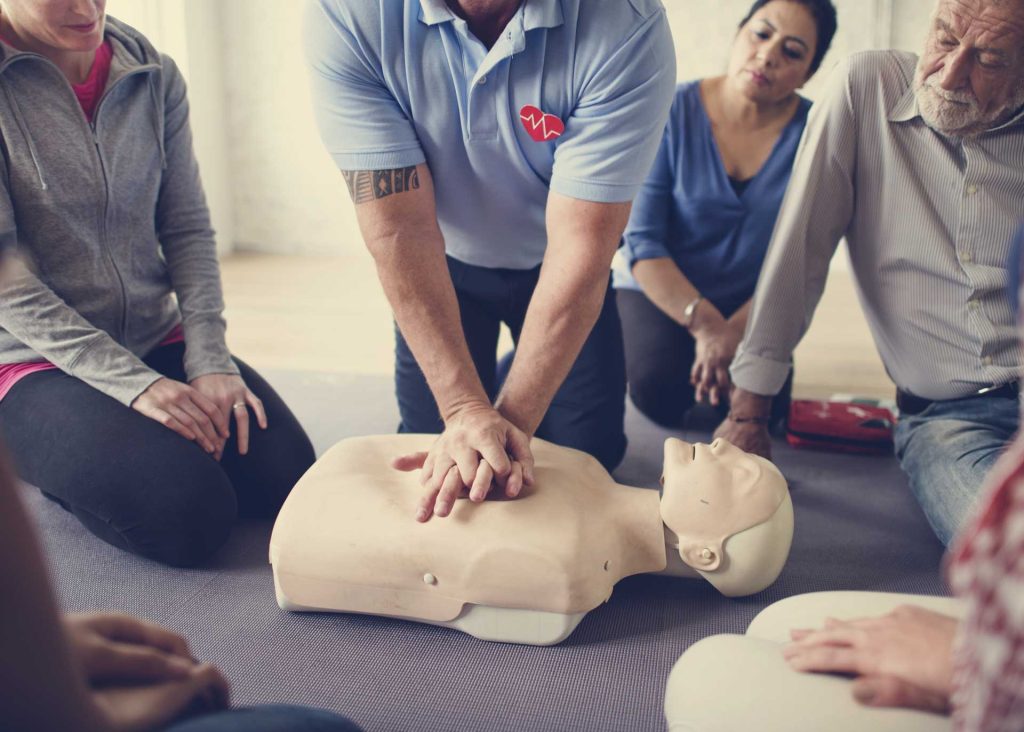
Assessment is often continuous as opposed to an intimidating last test. In many modern-day express first aid courses, trainers authorize off skills as they observe you doing them correctly.

When you leave, you must not feel like an emergency situation doctor. You must feel able to begin reliable first aid and to communicate clearly with moms and dads and paramedics regarding what you have seen and done.
Picking a trustworthy training provider
Searching for a fast first aid course near me or express child care first aid courses will certainly return a lengthy checklist of alternatives. Some are outstanding, some serve, and a few are poor sufficient that I would not want my own kid in the care of any individual they Visit website certificate.
A quick list aids when you speak with companies:
- Are the trainers experienced with kids, not just with first aid? Ask whether they have worked in child care, colleges, paediatrics or emergency situation services. Is the course identified or approved by a trustworthy body in your area? Ask specifically which qualification you will certainly receive. How much time is hands‑on? If a lot of the day is lecture‑based, that is not perfect for an express course. How several participants per manikin and trainer? High ratios weaken method and feedback. Does the content plainly match your setting? Baby rooms, childminders, sports clubs and household treatment all need slightly various emphases.
For existing personnel, fast CPR refresher courses can be a helpful method to maintain skills sharp without losing a full day. Just guarantee that refreshers still consist of actual technique, not simply enjoying a video.
Certificates, lawful duties and what they do not show
Most express childcare first aid training leads to a first aid certificate legitimate for a given duration, frequently one to three years. Companies naturally concentrate on keeping these certificates in date. Regulators frequently insist on minimum varieties of personnel with current first aid and CPR training classes.
There are, however, a couple of uncomfortable facts that experienced instructors recognise.
The first is that skill decay is genuine. CPR top quality and self-confidence in managing choking start to go down within months for many individuals that rarely technique. That is why short, focused refreshers, even casual ones within a setup, can be so important between formal courses.
The secondly is that a first aid certificate is proof that the person attended and fulfilled the evaluation standards then in time. It is not proof that they will carry out completely under tension. Culture, management and routine drills within the childcare setup issue just as much.
The third is that lawful conformity and real safety are not the same. You can technically meet required numbers of certified first aiders while placing them all on the exact same floor, or only on particular changes. Threat assessments ought to affect the number of staff undertake first aid courses and where they are deployed.
When you buy express child care first aid training, deal with the certificate as the begin of a process, not completion. Develop method right into team conferences, motivate individuals to share near‑misses, and treat every actual event as an opportunity to evaluate and learn.
Simple steps to adhere to in any type of child care emergency
Despite the variety of circumstances express first aid courses cover, most childcare emergencies gain from an easy, repeatable sequence.
Here is a practical structure that aligns with contemporary first aid and CPR training:
Pause and shield. Take one breath, scan for risk, move threats or move the kid if needed. Check reaction and breathing. Talk with the kid, tap gently, look for normal breathing and movement. Call for help early. Scream for a coworker, phone emergency situation services if serious, and ensure somebody informs parents. Start the best fundamental intervention. This might be positioning, stress on an injury, cooling down a shed, assisting with medication, or CPR. Keep communicating. Assure the youngster, clarify to onlookers what is taking place, and hand over plainly to paramedics or parents.Express first aid and CPR courses exist to make those steps automated. When personnel from the exact same baby room or club train with each other, they can likewise designate duties in advance. One person leads treatment, an additional takes care of the setting, a third deals with interaction and documentation. That synergy is what protects against turmoil in an actual emergency.
Final ideas: what "adequate" truly means
No child care professional must feel they need to come to be a clinical expert. Your duty in an emergency situation is to bridge the space in between event and expert treatment, making use of simple first aid principles.
Well developed express first aid courses and express childcare first aid training respect the constraints on your time while taking that duty seriously. They concentrate on the situations you are probably to encounter, they pierce the skills that really conserve lives or avoid impairment, and they offer you enough practice that your hands know what to do even when your heart is racing.
If you are responsible for organizing training, treat common, ultra‑quick first aid certification with care. Ask detailed inquiries, insist on paediatric‑specific web content, and select service providers whose fitness instructors plainly understand the facts of dealing with children.
If you are participating in as a carer, enter prepared to practise, to ask uncomfortable questions, and to connect each circumstance to your very own atmosphere. A couple of focused hours of genuine express first aid training can make the difference between panic and deliberate activity on the day you really hope never ever comes.